

About My Campaign
In December 2024, I woke to my mother calling for help because my father wasn’t responding. It was a moment no one is ever truly prepared for. Just months earlier, I had completed a CPR course, yet when everything suddenly became real, I felt overwhelmed. As I stayed on the phone with first responders, doing the compressions I had only ever practiced in training, I tried desperately to stay focused. The emotions, the fear, the uncertainty — everything pressed down at once. Minutes stretched into what felt like an eternity. And as I did everything I could in that moment, a quiet question formed in the back of my mind: If an AED had been available, could it have changed this?
My father passed suddenly that morning at just 58. He was the kind of person who put others first without hesitation, someone who made you feel heard, valued, and cared for. He would have done anything to help someone else. That is why this project matters so deeply to me. It is a way to honour who he was by doing something that might give another family the chance we didn’t have.
Memorial Park is one of the busiest and most cherished places in our community. It hosts sports games, movie nights, the Strawberry Festival, Victoria Day celebrations, and countless families enjoying the outdoors during the warmer months. It is a place full of life, connection, and shared moments. And yet, if a cardiac emergency were to happen there, the nearest AED is a 10-minute round-trip walk away at the Leisure Centre. The risk is even greater because the Leisure Centre is not always open, especially during major outdoor events when the park is at its busiest. In situations where seconds carry life-or-death weight, the distance and limited access are far too great. Survival decreases by up to 10% for every minute without defibrillation, yet when an AED is used immediately alongside CPR, the chances of survival can more than double.
A Save Station Tower would place an AED in the park at all times: day or night, winter or summer, during crowded celebrations or quiet evening walks. These stations are designed to withstand extreme weather, protect the device, and remain accessible to anyone who needs it. No training is required to use an AED; it guides the bystander step by step. It is built for ordinary people who suddenly find themselves in the hardest, most unexpected moments of their lives, just as I did.
When I think back to that morning with my father, I remember the helplessness, the frantic fear, and the desperate hope that what I was doing might be enough. I remember wishing that something — anything — could have tipped the odds in his favour. This project comes from that feeling. It comes from the hope that if someone else collapses in the park, the people around them will not have to wonder whether help is too far away. Maybe, because an AED is right there — visible, accessible, and ready to use — a life could be saved.
At the very least, I hope this sparks conversations about what it truly means to be prepared. Emergencies do not wait for the right time, the right place, or the right people. But we can choose to be a community that equips itself, that cares enough to act before tragedy strikes, and that believes a single life saved is worth everything.
Thank you for helping honour my father’s memory by bringing lifesaving access to Memorial Park — a place where families gather, where moments are shared, and where being prepared can make all the difference.
My Updates
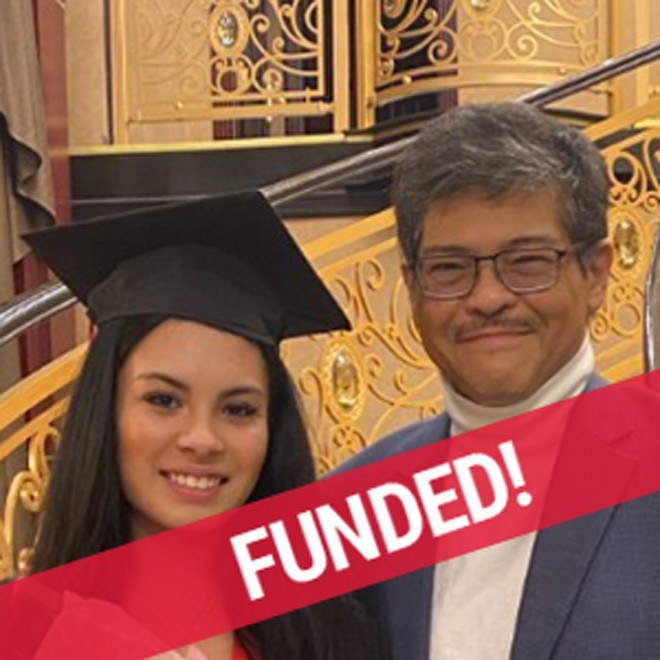
50% Funded in 24 Hours — Thank You for the Incredible Support!
I’m incredibly grateful to share that we have officially surpassed the halfway mark of our fundraising goal for the outdoor AED installation in Memorial Park.
The amount of support this campaign has received has been truly overwhelming. Every donation, message, and share has meant more than I can put into words. What began as a deeply personal project has grown into a collective effort to make our community safer and better prepared for emergencies.
Reaching this milestone brings us one step closer to ensuring that lifesaving equipment is accessible in Memorial Park at all times — during busy summer events, everyday activities, and everything in between. An outdoor AED can make a critical difference when seconds matter most.
Thank you to everyone who has supported this campaign so far. Your generosity, encouragement, and belief in this project continue to motivate me as we work toward the finish line.
Thank you to my Sponsors

$250
Jonathan Michaels
$50
Elizabeth Chung
$50
Isaiah Als
$20
Jacqueline Housden
What an incredible thing to do in memory of your dad. I didn’t know the story, thank you for being vulnerable and sharing that with us.
$25
Rida Raja
$50
Syed Umar
$50
Eric Buenafe
From Eric and MJ Buenafe Friend of your MOM
$5
Hossein
$10
April Rodriguez
$50
Wilson Hung
$50
Karunja Singaraj
$100
Jason Tang
$500
Georgina Roylance
Thank you for doing this! Love you
$50
Yasmin Sheikh
With much love❤️
$25
Julia Raguimov
$25
Anonymous
$10
Anonymous
$1,000
Ping-kam Chan
Dear Erin, Thank you for giving us this opportunity to make the world better. I believe that your father would be so proud of you and so are we.
$100
Kaitlyn Nguyen
$25
Julianna Syed
$5
Dalraj Saggy
Love what your doing for the community
$50
Anonymous
$25
Sophie Madge-nyren
$20
Jazz
$25
Sofia Da Luz
$50
Cheung Yiu Leung
$50
Ricardo Da Luz
Rest in peace uncle
$100
Horace Harper
I really miss my friend and long time colleague Ric. Happy to support you on this Erin
$50
Tanya Parapilly
$100
Grace Ng
$25
Jagdesh Birdi
This is such a great and important cause thank you for doing this!
$25
Anonymous
$50
Heather And Cameron Rogers
$50
Kevin Davison
All the best to you and Bonnie and good luck with this important project.
$100
Luc Landriault
You have grown into such an incredible person. You are going to smash this goal!!
$25
Kinza Arshad
$50
Jessica Su
$50
Elaine Kok
$50
Kacie Wassef
❤️❤️
$400
Stouffville Academy Of Music & Dance
Erin, what a wonderful tribute to your dad’s memory and a meaningful way to make a lasting impact on our community. We’re honoured to support this initiative. Thank you for the incredible work you’re doing! Lee & tom xo
$10
Jordan Chin
$100
Edith Wong
$50
Michelle Mcintyre
$250
Mark Wong
$50
Bilawal Ghumman
$50
Diane Hutton
A relative of a close friend of mine passed away 20 yrs ago in Oakville as an AED was not available in the rink when he had a heart attack on the rink and did not survive as one of these were bot available.
$25
Chantal Rochon
This is a wonderful idea Erin. I teach First Aid and CPR courses and I always look for AEDs wherever I go, just in case. If your crowdfunding efforts continue to grow, perhaps you can look at adding more at other parks within our beautiful town!
$50
Stuart Mcintyre
$10
Anonymous
$100
Wendy & David
Donation from Wendy and David
$25
Anonymous
$100
Z D
What a thoughtful initiative and an amazing way to honour your father!
$888
Antonio Da Luz
To my nig brother Thank you for everything. I miss you every single day, I look forward to us playing risk again one day Love you bro
$100
Anne Noronha
It's a pleasure to help you and to be a part of this cause in memory of your Dad.
$50
Camille Biscocho
$100
Peggy Wassef
What a wonderful idea, Erin?
$20
Anonymous
$250
Flora
Love you all with all our heart!
$50
Anonymous
Erin I am so sorry to hear about your dad. I had no idea until your mom sent me this. Thank you for recognizing the need for this support and taking initiative to make a change. Sending love to you both ❤️
$50
Angela Qiu
hope this helps ❤️
$50
Anonymous
Thanks for doing this for the community and in memory of our good friend!
$25
Tiana Campbell
$250
Chun-fai Chan
$25
Emeree Mac
$50
Magaña-gallegos Family
Is a small gesture full of love and we hope to help you on this goal. We are very proud of you for everything you have acomplish and we know your dad is too. This is a great way of honor his memory.
$200
Magoo Winston
FROM MR MAGOO!
$100
Deon & Alex
$50
Athiyan Thiruvananthaselvan
For a good cause.
$50
Kaivan Malek
$100
Kathy Stopar
Dear Erin - our deepest condolences to you and your mom. This is a wonderful memorial to your dad. Ric and I worked together at Bombardier and SNC Lavalin. May he rest in peace.
$200
Madeline And Kinsen
$20
Tandeep Sadhra
$100
Daanish Mulla
$25
Arsh Gilhotra
$50
Ashley Collinge
What a great initiative Erin!
$100
Gabrielle Wan
$12
Fanny Kiang
$50
Leo And Vicky
$100
Sherman Chau
$25
Angie Stevens
This is so beautiful! WOW! Bonnie, you obviously have raised an incredible young adult. So inspiring
$50
Hessami Realty Inc.
You are doing a great job🙏
$50
Vikki Fu
Wonderful cause, Erin!
$50
Andrea
What a wonderful thing you are doing in memory of your father! God Bless you
$100
Patrick Housden
Housden family
$22.22
Liana
You are doing big things !!
$50
Barbara
Sympathies to you and your family! What a meaningful way to honour your beloved father..
$25
Kareem O’brien
What a beautiful way to honour your father. His blessings to the world now live on and continue through you.
$500
Anonymous
Best Respects.
$200
Julie Roylance
$500
L & C Da Luz
With all the love in the world
$150
V Hoang
Hope this helps :)
$50
Irene Pang
$100
Chun-hei
Sorry for the late donation. I am very happy that you reached your goal! When I think of your dad, I always remember his humor and heart. This is a very fitting tribute to him. Congratulations!
$100
Chadwick Hung
$50
Dave Chu
$100
Samros Chau
Erin, What a powerful and heartfelt tribute. I’m so incredibly proud of you, of your courage, your compassion, and the way you’re turning unimaginable loss into something that can save lives. Your parents raised a remarkable woman, and I know without a doubt that both of them are so proud of you too. Your dad is watching from above with the warmest smile, seeing the love, strength, and purpose you carry forward in his name. Please keep reaching, keep believing, and keep working toward your goals, the impact you’re making truly matters. Sending you gentle, sweet wishes, continued strength, and so much love as you walk this meaningful path. Love, Samros
$500
Derek Yen
Well done Erin, your dad would be so proud of you
$200
Anne Roylance
$25
Sheila
$100
Lange Family
$25
